Losing a single tooth may seem like a small issue, but it can affect more than the visible gap. Surrounding teeth may begin to shift, and the jawbone in that area can gradually weaken over time. The choice between dental implant vs bridge influences long-term oral stability.
In my clinical practice, I look beyond the missing tooth itself. Every treatment plan considers the overall bite, the condition of neighbouring teeth, and the health of the jawbone so the chosen solution supports lasting function and balance.
The Changes That Can Happen After Tooth Loss
A missing tooth can gradually affect the surrounding teeth and jawbone. Over time, neighbouring teeth may shift into the empty space, while the opposing tooth may move out of position.
The jawbone in the area can also begin to shrink due to the lack of stimulation from a tooth root. These changes may make chewing less stable and oral care more difficult.
Replacing a missing tooth early helps maintain better balance and stability in the mouth.
Contact me to review suitable treatment options before deciding between a single tooth implant or bridge.
What Is a Dental Implant Bridge?
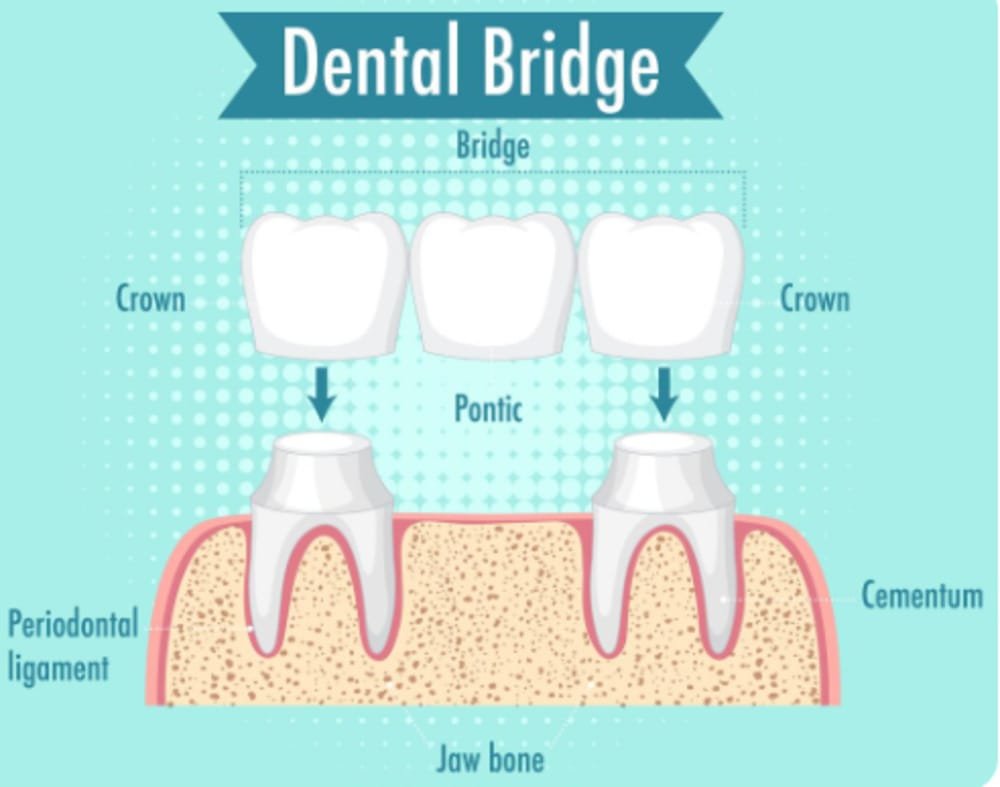
A dental bridge replaces a missing tooth by using the neighbouring teeth as support. The teeth beside the gap are prepared to hold crowns, which support an artificial tooth placed in between.
This option may be considered when the adjacent teeth already require crowns or additional restoration. The condition of the supporting teeth must be carefully evaluated before recommending a bridge.
What Is a Dental Implant?
A dental implant replaces a missing tooth by placing a small titanium post into the jawbone to act as an artificial tooth root. A crown is then attached on top to restore the appearance and function of the tooth.
Unlike a bridge, a dental implant does not rely on neighbouring teeth for support. It functions independently while helping maintain the jawbone in the area.
Explore the different types of dental implants to understand their safety and how long dental implants can last.
Dental Implant vs Bridge: A Side-by-Side Comparison
Both treatments aim to replace a missing tooth and restore chewing function. However, the way each option interacts with surrounding teeth and the jawbone can be very different.
| Consideration | Dental Implant | Dental Bridge |
| Support structure | Placed into the jawbone and functions like a tooth root | Supported by neighbouring teeth |
| Impact on adjacent teeth | Does not involve nearby teeth | Requires reshaping adjacent teeth to support crowns |
| Jawbone support | Helps maintain bone in the area | Does not stimulate the jawbone |
| Longevity | Designed as a long-term solution with proper care | May require replacement after several years |
| Cleaning and maintenance | Cleaned similarly to a natural tooth | Requires careful cleaning around the bridge |
Each option has its own advantages depending on the condition of the surrounding teeth and overall oral health.
Having a clinical evaluation by a dental implant specialist helps determine which approach is more suitable for long-term stability.
Unsure about choosing between a single tooth implant or bridge? Arrange a consultation with me for professional guidance before starting treatment.
Should I Get a Dental Implant or A Bridge?

This is one of the most common questions patients ask when considering tooth implant in Malaysia. The ideal choice depends on several clinical factors rather than a single universal answer.
During consultation, I usually evaluate several areas before recommending a treatment option:
- The condition of the neighbouring teeth
- The health and density of the jawbone
- The long-term stability of the bite
- Personal treatment goals and expectations
Each patient’s situation is different. A proper assessment allows the treatment to be planned in a way that supports both function and long-term oral health.
What Affects the Cost of Dental Implants and Bridges
In Malaysia, a dental bridge usually involves a lower initial fee, while a dental implant requires a higher upfront investment due to the surgical procedure and materials used.
However, treatment decisions should also consider long-term durability and maintenance. Some patients prefer to evaluate the overall value over time rather than focusing only on the immediate cost.
I provide a clear explanation of the treatment plan and expected outcomes helps patients understand how each option fits their oral health needs and financial planning.
Dr Elaine Lim’s Approach to Tooth Replacement Planning

With over 20 years of clinical experience in dentistry, I have treated many patients requiring tooth replacement, including dental implants and other restorative procedures.
Each case requires careful evaluation of the teeth, gums, and jawbone before deciding on the most suitable approach.
My clinical experience helps guide treatment decisions so the chosen solution supports stability, function, and long-term oral health.
Consult for Your Tooth Replacement Options with Dr Elaine Lim
Reading about treatment options can provide helpful guidance, but the most reliable way to decide between a dental implant or bridge is through a professional assessment.
Every mouth presents different conditions, and the most suitable solution often depends on factors that can only be evaluated during a clinical examination.
Contact me to discuss your dental implant needs and understand which approach supports their long-term oral health and comfort.
Frequently Asked Questions
Which is better: a dental implant or a bridge?
A dental implant stands independently in the jawbone, while a bridge relies on neighbouring teeth, so the suitable option depends on overall oral health and surrounding teeth condition.
Does a dental bridge affect healthy teeth?
Yes, a dental bridge requires the adjacent teeth to be prepared to support the replacement tooth.
Do dental implants affect surrounding teeth?
No, dental implants are placed in the jawbone and do not rely on neighbouring teeth for support.
How long do dental implants and bridges last?
Dental implants can last 15 to 25 years or longer, while dental bridges typically last 10 to 15 years with proper care.
Is a dental implant procedure painful?
Dental implant treatment is performed under local anaesthesia and most patients experience only mild discomfort afterward.
How do I know which option is suitable for me?
A clinical examination by an implant dentist helps evaluate the teeth, jawbone, and bite before determining the most suitable treatment.