Many patients considering dental implants worry about how long they will need to wait before they can eat comfortably, speak naturally, and return to their usual routine.
A typical dental implant healing timeline takes around three to six months before the final crown is placed, although most patients resume normal daily activities within two to three weeks.
The recovery period depends on factors such as bone density, gum health, implant stability, and how well you follow aftercare instructions throughout the healing process.
How Long to Recover After Dental Implant at a Glance
Every stage of dental implant healing has a defined timeframe, though jawbone quality and any grafting extend or shorten it. The table below sets out what happens at each point in the process.
| Stage | Timeframe | What Happens |
|---|---|---|
| Implant surgery | Day 1 | A titanium implant post is placed into the jawbone under local anaesthesia |
| Initial soft tissue healing | Days 3 to 10 | Swelling and tenderness ease; stitches dissolve or are removed |
| Osseointegration | 2 to 4 months (lower jaw), 4 to 6 months (upper jaw) | The jawbone fuses to the implant surface; duration depends on bone quality |
| Abutment placement | 2 weeks of gum healing after osseointegration | A connector is fitted and gums heal around it before the crown is measured |
| Crown attachment | Month 3 to 7 | The final tooth is fitted and your bite is adjusted |
The jawbone fusing to the implant is a process that takes several months depending on bone quality, making osseointegration the longest single stage in the timeline above.
Patients with good oral hygiene and no uncontrolled chronic conditions see dental implants succeed 90% to 95% of the time, highlighting why the habits you build during healing matter as much as the surgery itself.
Book a free consultation with me to get a recovery timeline mapped to your own jawbone and gum condition.
4 Factors That Affect Your Dental Implant Healing Timeline
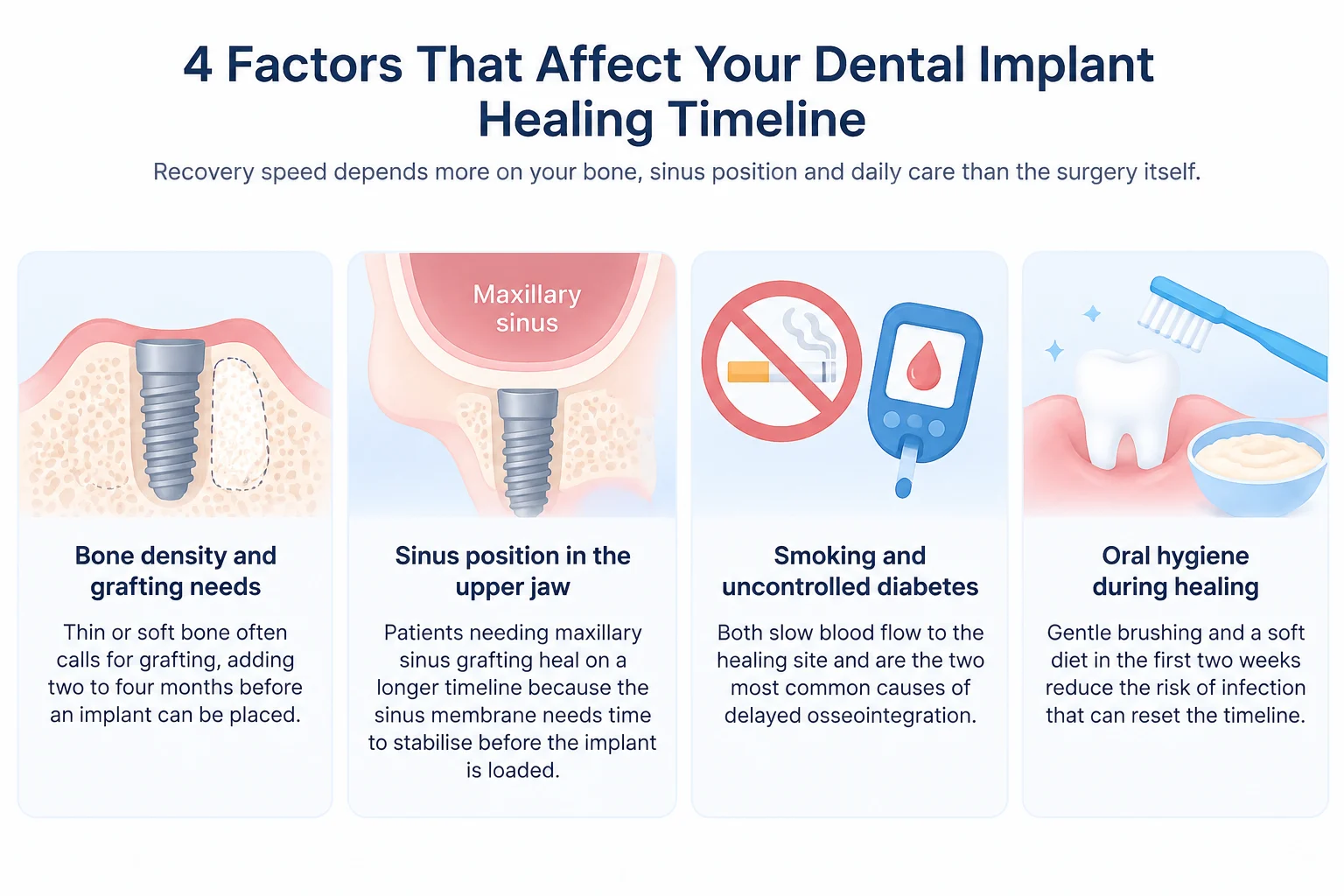
Recovery speed after dental implants depends more on bone quality, sinus position and daily care than on the surgery itself.
- Bone density and grafting needs: Thin or soft bone often calls for grafting, adding two to four months before an implant can be placed.
- Sinus position in the upper jaw: Patients needing maxillary sinus grafting heal on a longer timeline because the sinus membrane needs time to stabilise before the implant is loaded.
- Smoking and uncontrolled diabetes: Both slow blood flow to the healing site and are the two most common causes of delayed osseointegration.
- Oral hygiene during healing: Gentle brushing and a soft diet in the first two weeks reduce the risk of infection that can reset the timeline.
Key Recovery Milestones and When to Call Your Dentist
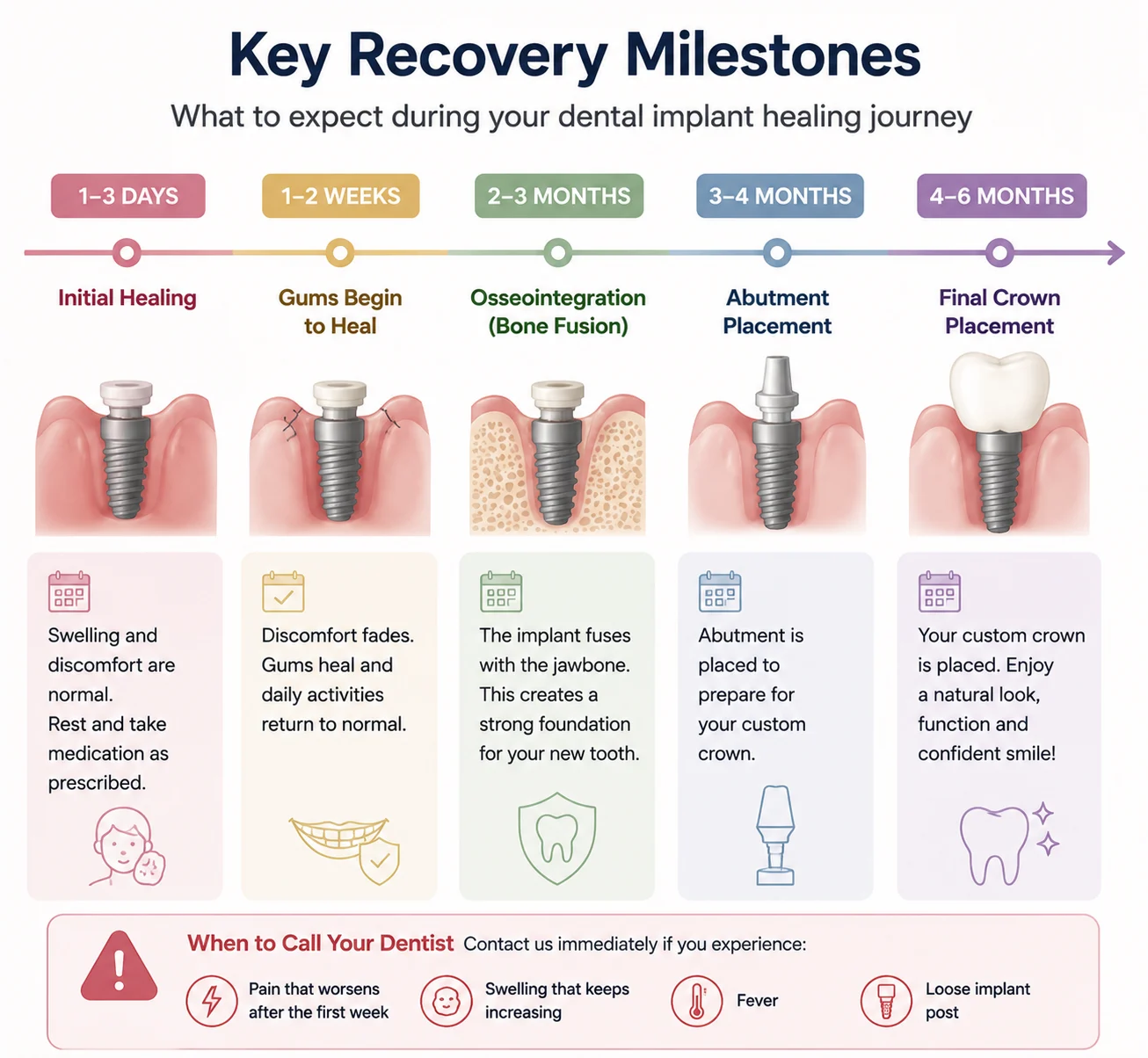
Knowing what is normal during each stage of dental implant healing helps you recover with confidence and recognise problems early. The first few days focus on managing swelling and discomfort, while the following weeks allow your gums and implant site to stabilise before the implant continues bonding with the jawbone.
Mild swelling that peaks around day two or three and gradually reduces afterward is a normal part of recovery. Tenderness, minor bleeding, and gum sensitivity during the first week are also expected and can usually be managed with the pain relief prescribed by your dentist.
Contact your dental surgery promptly if you experience pain that worsens after the first week, swelling that continues increasing instead of improving, fever, or an implant post that feels loose. These signs may indicate infection or a healing complication that requires professional assessment.
Dr Elaine Lim’s Clearer Dental Implant Healing Timeline Based on Your Condition
I begin each teeth implant assessment by reviewing these factors carefully, allowing patients to understand their expected recovery stages before treatment begins.
My experience in oral implantology, maxillary sinus grafting, hard and soft tissue augmentation, and fixed and removable prosthodontics helps identify cases that may require additional healing time, such as bone grafting or sinus-related procedures.
By planning these considerations early, patients receive a more predictable treatment journey with clear milestones for implant placement, healing progress, and final restoration.
With over 14 years of clinical dentistry experience and a background in dental education, I guide patients through each recovery stage with regular reviews, ensuring the healing timeline is adjusted according to how the implant site responds.
Learn more about my approach through the dental implant treatment based on my implant dentist expertise.
Get Your Personalised Dental Implant Healing Timeline With Dr Elaine Lim
Every dental implant journey heals differently, and relying on a general timeline may leave you unprepared for the actual recovery process.
I assess your bone density, sinus condition, gum health, and treatment requirements to create a healing timeline, including each recovery milestone before and after implant placement that matches your implant needs.
Book your consultation with me today to discover your expected dental implant healing timeline and start your treatment with a clear recovery plan.
Frequently Asked Questions About Dental Implant Healing Timeline
How long does dental implant healing take before I can eat normally again?
Most patients return to a normal diet within 2 to 3 weeks, and Dr Elaine Lim confirms soft tissue healing at your follow-up visit before clearing solid foods.
How long does osseointegration take to complete?
Osseointegration generally takes 2 to 4 months in the lower jaw and four to six months in the upper jaw, which Dr Elaine Lim verifies with a follow-up scan before fitting the abutment.
Does bone or sinus grafting extend the dental implant healing timeline?
Bone and maxillary sinus grafting typically add 2 to 4 months of extra healing, a step Dr Elaine Lim plans for during your initial consultation.
What happens if a dental implant does not heal properly?
A failed implant is removed and can usually be retried after about 3 months, an outcome Dr Elaine Lim reduces through careful bone and sinus assessment before surgery.
Is recovery after dental implant surgery painful?
Most patients report less pain and swelling than after a tooth extraction, and Dr Elaine Lim provides a personalised aftercare plan to manage any discomfort.
How do I know my dental implant is healing well?
A firm, immobile implant post and swelling that steadily reduces day by day are signs of normal healing that Dr Elaine Lim checks at your scheduled review visits.